
Gait equipment · Shared-use decision
Clinic vs Pediatric Parallel Bars: Can One Set Work?
A mixed-age clinic needs more than a “height adjustable” label before approving a shared parallel-bar station.
Prepared by RehabIntl from current catalog information: . Exact configuration remains subject to written confirmation.
Quick answer
Do not approve one set of parallel bars for both pediatric and general clinic use from the product label alone. Match the confirmed adjustment ranges, platform and access arrangement to each planned user group, then have the responsible professionals review the complete setup.
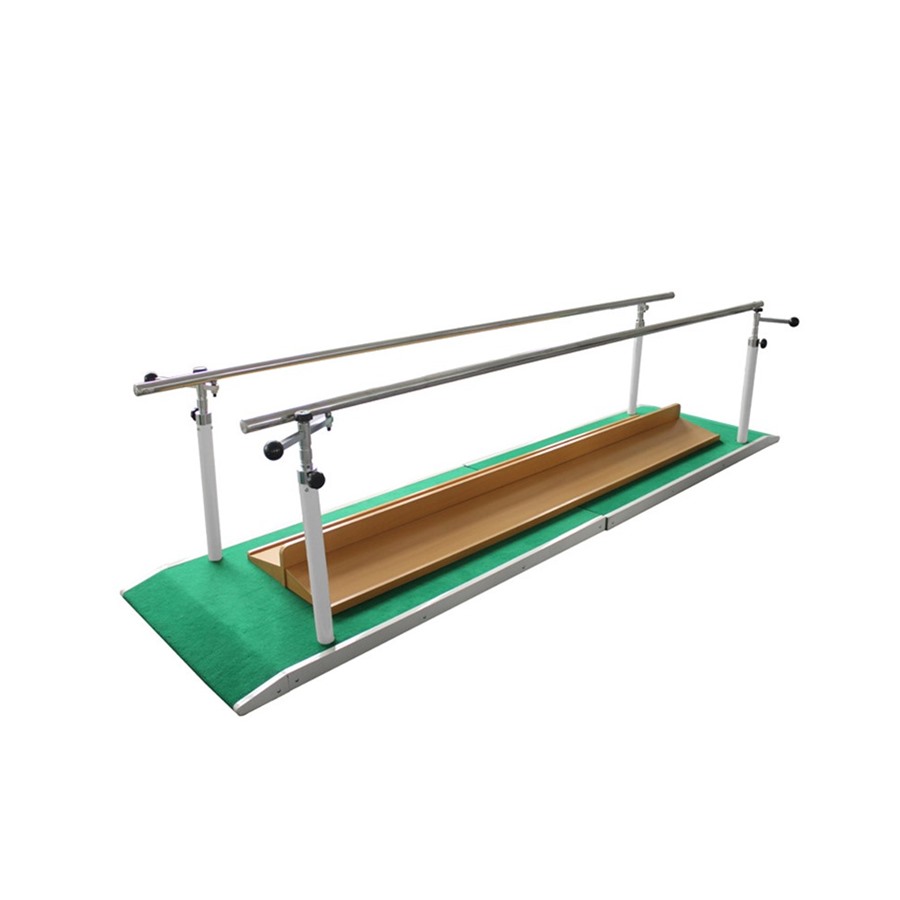
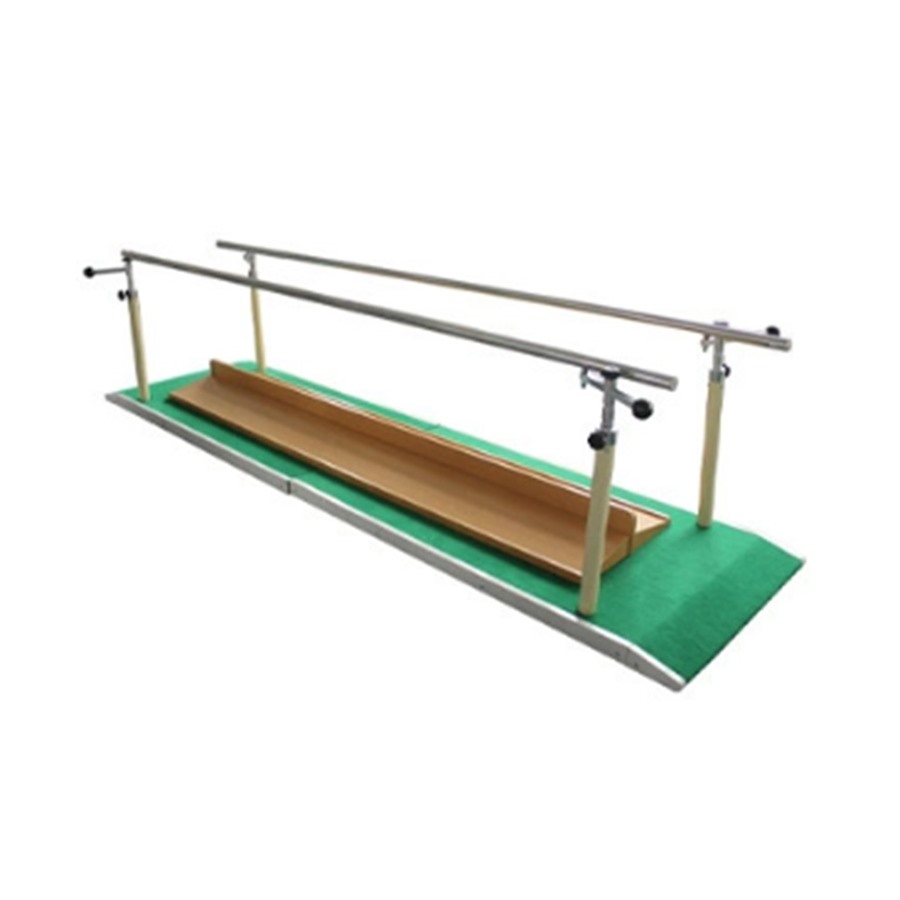
Two options in our parallel-bar range
Our range includes KF-PHG-1 parallel bars for professional rehabilitation settings and JYE-PHG child-sized parallel bars for pediatric therapy. If your clinic serves both groups, start by comparing the handrail adjustment, platform, entry arrangement and accessories you need—not just the model names.
Before choosing one shared station, request the current adjustment drawings for the exact configuration from RehabIntl. We do not recommend treating “child-sized” as an age limit or assuming that lowering a general-clinic handrail makes the whole station suitable for a child.
This guide is for procurement teams deciding whether to request a shared station or separate configurations. It does not prescribe handrail positions, determine individual suitability or recommend improvised modifications.
Separate the user requirement from the equipment range
Ask the responsible team to describe what each planned group needs from the station: the supervised activity, handrail arrangement, access and transfer method, and therapist working space. Do not use age alone as the specification. The clinical team should define the relevant fit and support requirements.
For your RehabIntl enquiry, request the handrail height and width adjustment information for KF-PHG-1 and the child-appropriate adjustment information for JYE-PHG. Ask for the current drawing and manual for the proposed configuration so your team can compare the actual ranges with its requirements.
Where a dimension is adjustable, ask how it is measured, what units are used, and how the documented adjustment is secured. A nominal minimum or maximum is not useful if the buyer and supplier are measuring from different reference points.
A shared-use review sheet
Complete one sheet for each proposed configuration. The first column comes from the responsible team; the equipment response comes from the supplier. Keep a separate professional review decision rather than allowing a blank field to become an assumed match.
| Review point | Each planned group's requirement | Confirmed equipment response |
|---|---|---|
| Model, configuration and drawing revision | Project reference: _____ | _____ |
| Handrail height, units and measurement reference | _____ | Range / reference: _____ |
| Width or spacing requirement | _____ | Range / reference: _____ |
| Platform and entry / transfer arrangement | _____ | Drawing / included scope: _____ |
| Required supports or accessories | _____ | Included / optional / unavailable: _____ |
| User limits stated by manufacturer | Team-defined requirement: _____ | Manual / rating: _____ |
| Therapist access and surrounding space | Facility review: _____ | Installed drawing: _____ |
| Adjustment between groups | Workflow requirement: _____ | Documented procedure: _____ |
| Decision and unresolved items | Reviewer: _____ | Match / pending / not a match: _____ |
This is a proposed buyer worksheet, not a specification for either model. Do not copy a response from the KF-PHG-1 sheet onto the JYE-PHG sheet without model-specific evidence.
When should separate stations remain on the shortlist?
Keep separate configurations under consideration when the confirmed equipment cannot meet one group's requirements, when access or included components differ, or when the responsible team cannot approve the shared setup. An unresolved fit question should remain unresolved; it is not a reason to assume a universal configuration.
There is also a scheduling question. Even if one confirmed setup suits both planned groups, a shared station may conflict with simultaneous sessions. Ask the facility to review its actual programme and changeover process. This is an operational consideration, not evidence that either model has a particular adjustment speed or capacity.
Conversely, do not order two stations solely because the catalog uses two different names. First compare the supplier's confirmed information against the real project requirements. The decision should follow that review, not the label.
Make the quotation reflect the decision
If shared use remains a candidate, send us the completed review sheet and ask for a quotation identifying the exact configuration and included accessories. Do not request an unspecified “adult and pediatric version” as a single line. The response should identify which product and configuration are proposed and what evidence supports the required fit.
For separate stations, keep the model quantities and component lists separate. Also request installed drawings and packing data for each item; sharing a room does not make their dimensions or assembly requirements identical. Do not alter platforms, add unapproved supports or substitute parts to overcome a mismatch without supplier instructions and appropriate professional review.
What to confirm before purchase
- Exact KF-PHG-1 or JYE-PHG configuration, quantities and destination.
- Professional-defined requirements for each intended user group.
- Documented handrail adjustment, platform, access and manufacturer user limits.
- Included accessories, installed dimensions, room clearance and changeover process.
- Packing, assembly responsibility, manuals, applicable electrical details and destination-market documents.
Send RehabIntl your planned user groups, quantities, destination and completed review sheet through our quotation enquiry. Include any unresolved fit or access questions so they can be addressed for the exact model before you order.
Buyer FAQ
Can the general clinic model be ordered for children just by lowering the bars?
Do not assume that. Request its confirmed adjustment and access information and have the responsible professional compare the complete configuration with the intended users' requirements.
Does “pediatric” establish the maximum user size?
No. The JYE-PHG listing does not give a complete user-limit specification. Request the current manufacturer information rather than inferring limits from the label or photograph.
What if one dimension matches but the platform or access does not?
The configuration is not fully matched. Record the unresolved requirement and request clarification; a suitable handrail height alone does not establish that the complete station is appropriate.