Product Snapshot
- Model
- KF-PHG-1
- Category
- Gait Training
- MOQ
- 1
- Size
- Confirm before order
- Documents
- Confirm by destination market

Gait Training
Parallel bars for supervised standing, balance, transfer, and gait training in professional rehabilitation settings.
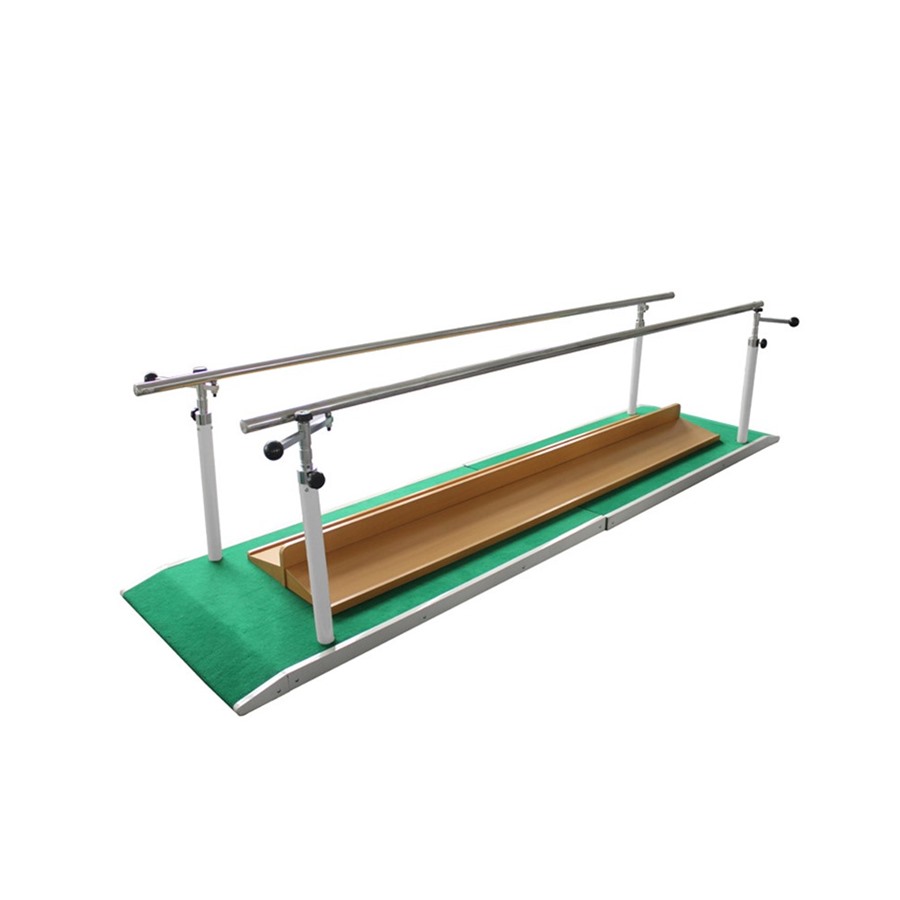
Product overview
KF-PHG-1 provides a defined training area for therapist-supervised standing and walking activities. It can be considered for rehabilitation clinics, therapy rooms, senior-care projects, and distributors building a practical gait training range.
Accessory sets may differ by order. Ask for a model-specific included-parts list and product photos before purchase.
Yes. Send the model numbers, quantities, destination country, and buyer type for a combined clinic or distributor quotation.
Certificate and registration status varies by product and market. Request model-specific document verification before advertising or purchase.
Buyer reference
Parallel bars are fixed, guided walking and standing equipment used in supervised rehabilitation settings. They are different from a treadmill, a body-weight-support system, or a mobile gait trainer: each has a different role in a therapy-room workflow.
Put 1 exact model, 1 quantity, and a separate accessories line on the request. Before freight planning, ask for 4 logistics fields: package count, packed dimensions, gross weight, and delivery term. For room planning, confirm 3 physical checks: installed length, width or clearance, and the access route for delivery.
Parallel bars may be considered when the planned programme needs a stable, therapist-accessible walking route. A treadmill may be considered when belt-based walking practice is required. A gait trainer or support system may be considered where the planned workflow needs a different level of support. The clinical team should define the intended use and safety process.
| Check | Compare on the same basis |
|---|---|
| Equipment configuration | Exact bars, platform, ramp, and included accessories. |
| Room and delivery fit | Installed footprint, access route, packed dimensions, and gross weight. |
| Commercial scope | Written documents, packing, delivery term, and stated exclusions. |
Not necessarily. Request a written included-parts list for the exact proposed configuration.
No. They provide a different training environment from treadmills, mobile gait trainers, and body-weight-support systems. The intended programme should drive the shortlist.
Confirm the exact model, packing, destination requirements, documents, and commercial terms before arranging payment or freight.
Parallel bars are usually installed as part of a physical therapy or gait-training area, so the room is part of the purchase decision. Buyers should consider how a user enters the area, where a therapist stands, whether another person needs access, and how a wheelchair, mobility aid, or cleaning equipment passes through the room. The quoted footprint is only one part of that discussion.
It is useful to sketch the intended location before comparing offers. Mark the bar location, platform or ramp if required, nearby walls, doors, storage, and the normal route from the treatment area. The final layout should preserve safe circulation and any clearance required by the facility. The manufacturer or supplier can confirm product dimensions, but the facility remains responsible for deciding whether its planned room layout is suitable.
Parallel-bar orders can vary in accessories, platform arrangement, and the items supplied for installation. When a configuration is selected, ask for the quotation to distinguish standard items from options. If photographs are supplied, use them as a reference alongside the written list rather than as the only record of what is included.
The same principle applies to export preparation. Retain the final model name, quantity, accessories, packing information, quotation basis, and any destination-specific document questions with the order file. If the shipping plan changes, these records make it easier to check whether the packed shipment and commercial documents still match the agreed scope.
This page is intended to help a buyer prepare a clear equipment inquiry. It does not determine a patient programme, a clinical risk assessment, or a market-specific compliance decision. Those decisions should be made by the appropriate qualified people before the equipment is put into use.
When the request is ready, send the model reference, quantity, destination, room notes, and any required accessories or documents together. If an item is uncertain, label it as a question rather than treating an assumed feature as confirmed. A short, precise list normally produces a more useful response than a broad request that leaves the configuration, packing, and delivery basis undefined.
Keep records current.
Request this model
Send the model number, quantity, destination country, and whether you need CE, FDA, UKCA, or local registration documents checked before purchase.