
Upper-limb rehabilitation buying guide
Upper-Limb Rehabilitation Equipment: How to Build a Practical Training Area
A practical upper-limb training area balances equipment function with user access, therapist access, surface height, circulation, storage, and power requirements.
Published and reviewed:
Quick answer
Define the intended users and activities, then compare training tables by working height, surface layout, adjustment, accessories, digital options, footprint, wheelchair access, and electrical requirements.
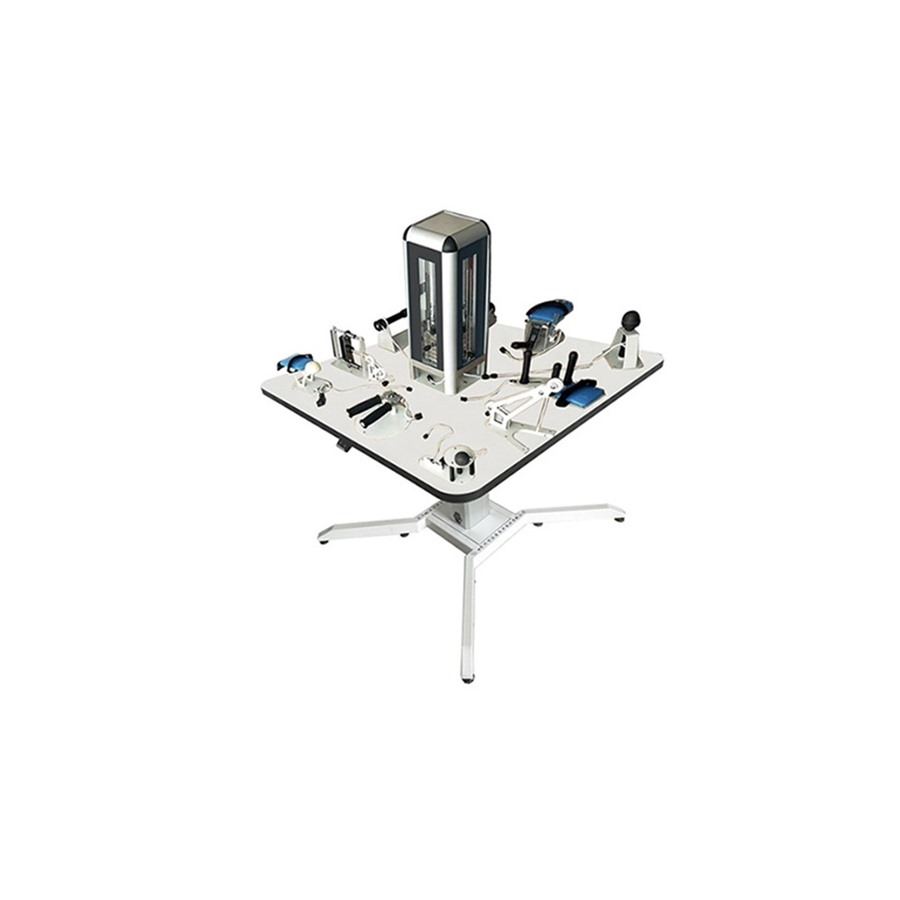
Define the training area
Record whether the area is for seated work, wheelchair-accessible activities, therapist-assisted positioning, or mixed workflows. Leave clear approach and circulation space around the table and storage.
Start with the upper-limb rehabilitation category and compare the available electric and standard configurations.
Compare the table configuration
Ask for the adjustment range, working surface, included training components, software status where applicable, controls, power requirements, dimensions, and standard versus optional accessories. Do not assume that a software configuration has the same contents as a standard model.
Check access and workflow
Measure wheelchair approach, therapist standing space, adjacent equipment, storage, cleaning access, doorway width, and delivery route. The table should fit the work area without blocking the room’s other activities.
What to confirm before purchase
Confirm the exact model, user access, adjustment range, included accessories, dimensions, electrical requirements, packing, documents, and destination-market requirements.
Frequently asked questions
How should a clinic begin the shortlist?
Start with the user group, therapy program, room workflow, and delivery constraints, then compare exact models and configurations.
Should similar equipment be treated as interchangeable?
No. Adjustment range, access, accessories, dimensions, and document status can differ between models and must be confirmed.
What should be confirmed before ordering?
Confirm the exact model, configuration, quantity, dimensions, packing, electrical requirements, documents, and destination-market requirements.
Definition
An upper-limb rehabilitation training area is planned around reaching, grasping, positioning, exercise, therapist access, storage, and user flow. Equipment should be selected as a room system rather than a collection of unrelated devices.
Numeric facts to include in the enquiry
- State 1 planned activity zone and user group.
- Request 1 exact model and 1 quantity for priority items.
- Record 4 logistics fields: package count, packed dimensions, gross weight, and delivery term.
Planning steps
- Map activities, transfer, supervision, and storage.
- Separate opening essentials from later accessories.
- Check clearance, cleaning, access, and adjustment ranges.
- Compare equivalent configurations and support scope.
Buyer FAQ
Can one upper-limb device support every activity?
No. Activity, user group, adjustment, and therapist workflow vary.
What should the room plan show?
Equipment footprint, user approach, therapist access, storage, and clear circulation.