
Delivery planning
Rehab Equipment: Packed vs Installed Dimensions
Installed dimensions describe equipment in the room; packed dimensions describe each shipping package. Neither alone confirms delivery access. Request a third set of transport dimensions for the supplier-approved delivery configuration, with units, orientation and assembly responsibility.
Prepared by RehabIntl from current catalog information: . Exact order scope remains subject to written confirmation.
Quick answer
Installed dimensions describe equipment in the room; packed dimensions describe each shipping package. Neither alone confirms delivery access. Request a third set of transport dimensions for the supplier-approved delivery configuration, with units, orientation and assembly responsibility.
Which measurement answers which question?
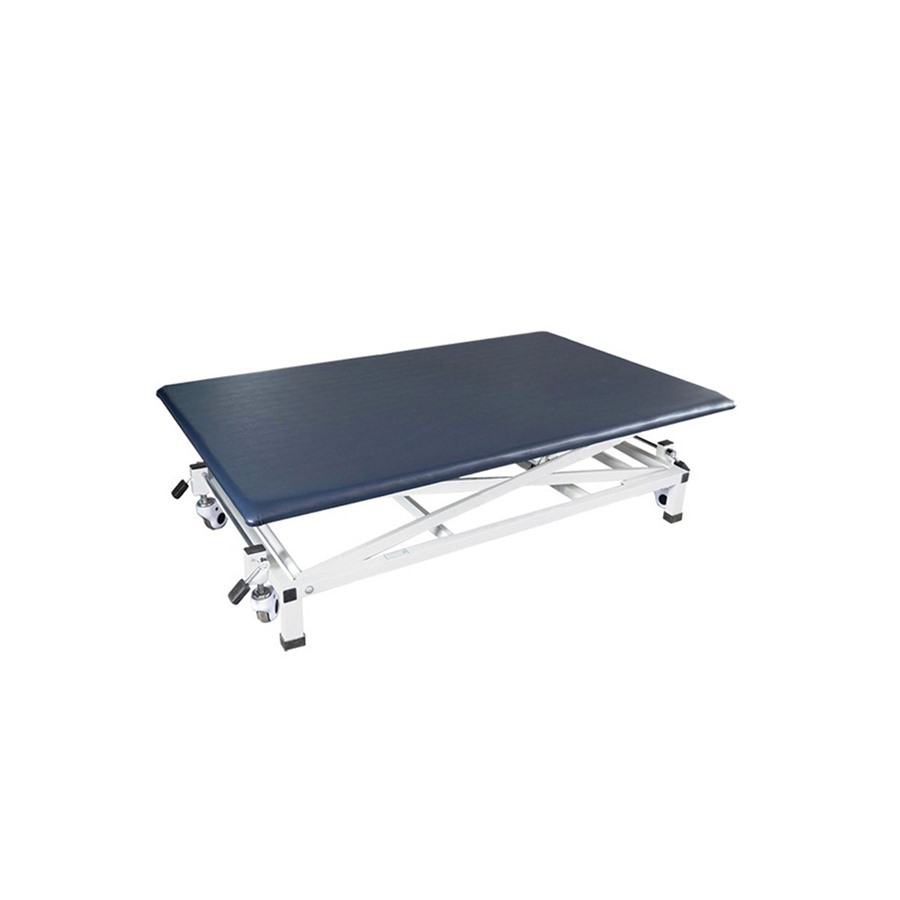
A clinic purchasing the KF-XLC-D/PT-2 table and KF-XFT-1 stairs needs different measurements for room planning and shipment planning. Their product pages request confirmation of packing and access information; they do not establish a complete delivery drawing. A photograph cannot resolve the missing dimensions.
The PT-2 catalog currently contains a size entry without a complete dimension set or stated unit. Do not turn that entry into a room-fit calculation. The stairs listing asks for the current datasheet rather than publishing a complete footprint. Obtain dated drawings for the quoted configurations.
| Dimension set | Question it answers | Evidence to request |
|---|---|---|
| Installed | Will the equipment fit in its intended position? | Overall length, width and height; adjustable or projecting parts; operating envelope |
| Transport | What object will handlers actually move inside? | Supplier-approved assembly state, external dimensions, weight and permitted orientation |
| Packed | What packages will the carrier receive? | External dimensions and gross weight of every package, package count and packing revision |
Allowing space for operation, access and supervision is a separate facility decision. A footprint is not a recommended room size, and this worksheet does not set a universal safety clearance.
Build one measurement record per configuration
Copy the following blank sheet for each model and each package. Record units beside every value. Use the same length–width–height convention throughout, but preserve the supplier's permitted orientation. “Pending” means unresolved, not accepted.
| Record field | Supplier-confirmed value | Drawing / revision / reviewer |
|---|---|---|
| Model, configuration, quantity | _____ | _____ |
| Installed L × W × H and units | _____ | _____ |
| Adjustment and operating envelope | _____ | _____ |
| Transport state, L × W × H, weight | _____ | _____ |
| Package ID and total package count | _____ | _____ |
| Packed L × W × H, units, gross weight | _____ | _____ |
| Permitted orientation and handling instructions | _____ | _____ |
| Unpacking location and assembly responsibility | _____ | _____ |
Do not divide total shipment weight by the number of packages and treat the result as a package weight. Packages may differ. Match each crate identifier to its own size and weight record.
How should the facility review the delivery route?
Measure the usable openings and route restrictions from unloading point to final room: doors, lifts, corridors, turns, thresholds and temporary obstructions. A nominal door size is not necessarily the usable opening. Send route photographs and measurements without patient information to the supplier and delivery contractor.
For the PT-2, ask whether the proposed transport state differs from the installed table and who reinstates any removed components. For the KF-XFT-1, request the shipped assembly arrangement rather than assuming the stair unit can be divided. Do not improvise dismantling instructions to make a delivery route work.
A straight-door comparison does not prove that a long item can turn through a corridor or enter a lift. The contractor should review the complete route, handling plan and facility restrictions; do not rely on an unverified diagonal calculation.
Resolve conflicting sheets before booking freight
If the quotation, drawing and packing estimate disagree, ask which revision governs the order. Identify whether a value is preliminary or final. Changes to accessories, packaging or assembly state should trigger another route and freight review.
Keep equipment approval separate from logistics approval. Record the unresolved field, the responsible party and the requested evidence. Agree how final packing data will be confirmed before dispatch rather than treating an early estimate as the final packing list.
What to confirm before purchase
- Exact PT-2 or KF-XFT-1 configuration, quantities and destination
- Complete dimensions with units and dated drawings, not catalog shorthand
- Installed envelope, approved transport state and per-package packing data
- Route review, unpacking location, assembly responsibility and handling instructions
- Applicable electrical details, requested documents and delivery scope
Send the relevant worksheet and your unresolved fields with a quotation request. Ask for written confirmation for the exact model and destination market.
Buyer FAQ
Can installed dimensions be used to price freight?
Not as a substitute for packing data. Request the external size and gross weight of every shipping package and confirm them with the carrier.
Can we remove parts to get the table through a door?
Only use a configuration and procedure confirmed by the supplier. Agree who performs the work, reassembly and checks; a buyer-created dismantling plan is not sufficient.
What if the supplier only has estimated packing sizes?
Label them preliminary. Ask when final package data will be available and make freight and access decisions subject to that confirmation.