
Therapy tables · Configuration comparison
Electric Tilt Table: Correction Board vs Foot Adjustment
KF-XLC-D/ZL-4 and KF-XLC-D/ZL-3 are separate electric tilt-table configurations that should be compared by their confirmed positioning features and full quotation scope.
Published and reviewed:
Quick answer
Compare the correction-board configuration and foot inversion/eversion configuration as exact models. Confirm tilt range, controls, straps, foot support, electrical specification, load, dimensions, and included accessories before selecting either option.
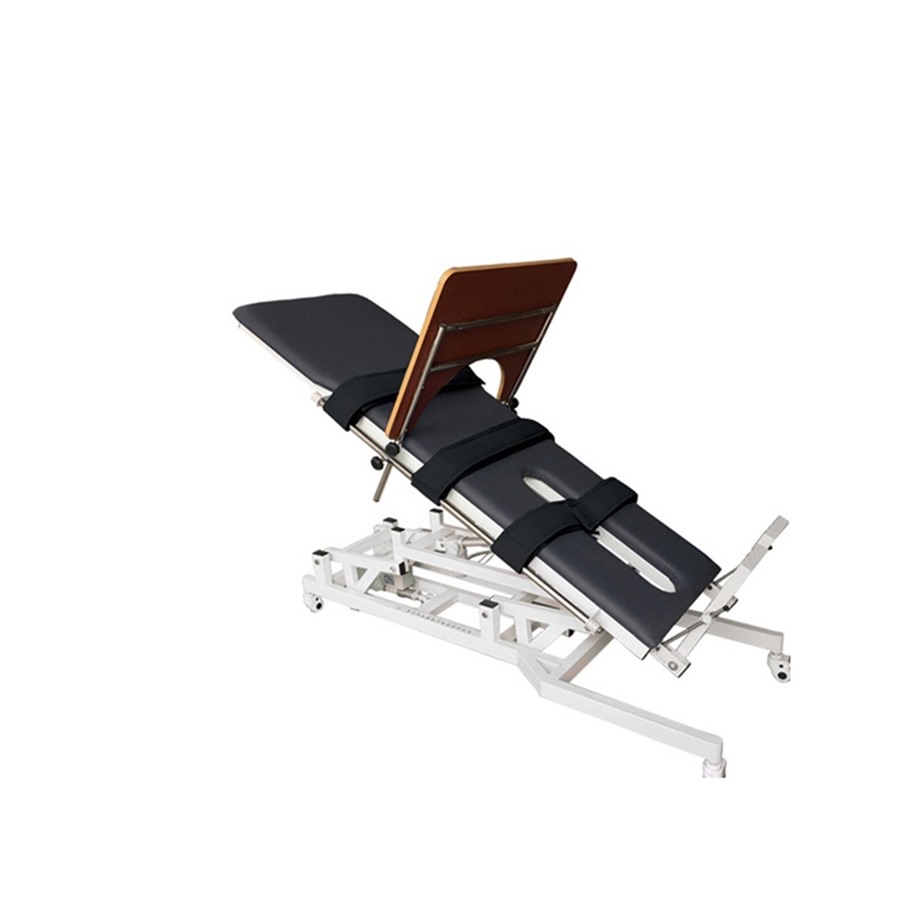
Compare the confirmed configuration
KF-XLC-D/ZL-4 is presented with a correction board, while KF-XLC-D/ZL-3 is presented with foot inversion and eversion adjustment. These labels do not define the complete offer. Request the exact included supports, straps, footplate details, adjustment method, and control scope for the quoted model.
Check the room and delivery conditions
The ZL-4 catalogue entry lists 225 × 85 × 114 cm, while ZL-3 lists 202 × 81 × 106 cm. Confirm complete dimensions, packed dimensions, access route, assembly, electrical supply, and service arrangements for the exact project.
What to confirm before purchase
- Exact ZL-3 or ZL-4 model and included supports
- Tilt, foot or correction-board adjustment, controls, and emergency procedures
- Load, electrical details, dimensions, packing, documents, and destination requirements
Buyer FAQ
Can a catalogue entry replace a quotation?
No. Request the current datasheet and a written quotation that identifies the exact model, included accessories, packing, documents, and destination requirements.
What should a project inquiry include?
Include the intended setting, quantity, destination, room access, required configuration, delivery constraints, and requested documents.
Definition
An electric tilt table with a correction board and one with foot adjustment may serve different positioning and supported-standing workflows. Buyers should compare the support configuration, adjustment range, transfer access, therapist control, room footprint, and included accessories.
Numeric facts to include in the enquiry
- Identify 1 intended therapy workflow and user group.
- Request 1 exact model, tilt range, table dimensions, foot adjustment details, and safe working load.
- Confirm 3 supply fields: controls, package information, and installation or delivery scope.
Comparison steps
- Describe the transfer, positioning, and supported-standing tasks before comparing the two configurations.
- Check correction-board geometry, foot support, straps, controls, clearance, and power requirements.
- Ask for accessories, commissioning, training, freight, and after-sales responsibilities in writing.
- Compare equivalent configurations against the clinic’s operating procedure.
Buyer FAQ
Is foot adjustment an alternative to a correction board?
They support different setup needs and are not interchangeable by default. Compare the exact therapy workflow and configuration.
What should be checked before delivery?
Check footprint, transfer route, operating clearance, power, package dimensions, and who is responsible for installation.